
Ismail
The remarkable story of a friend, a fallen hero, whom I will never forget.

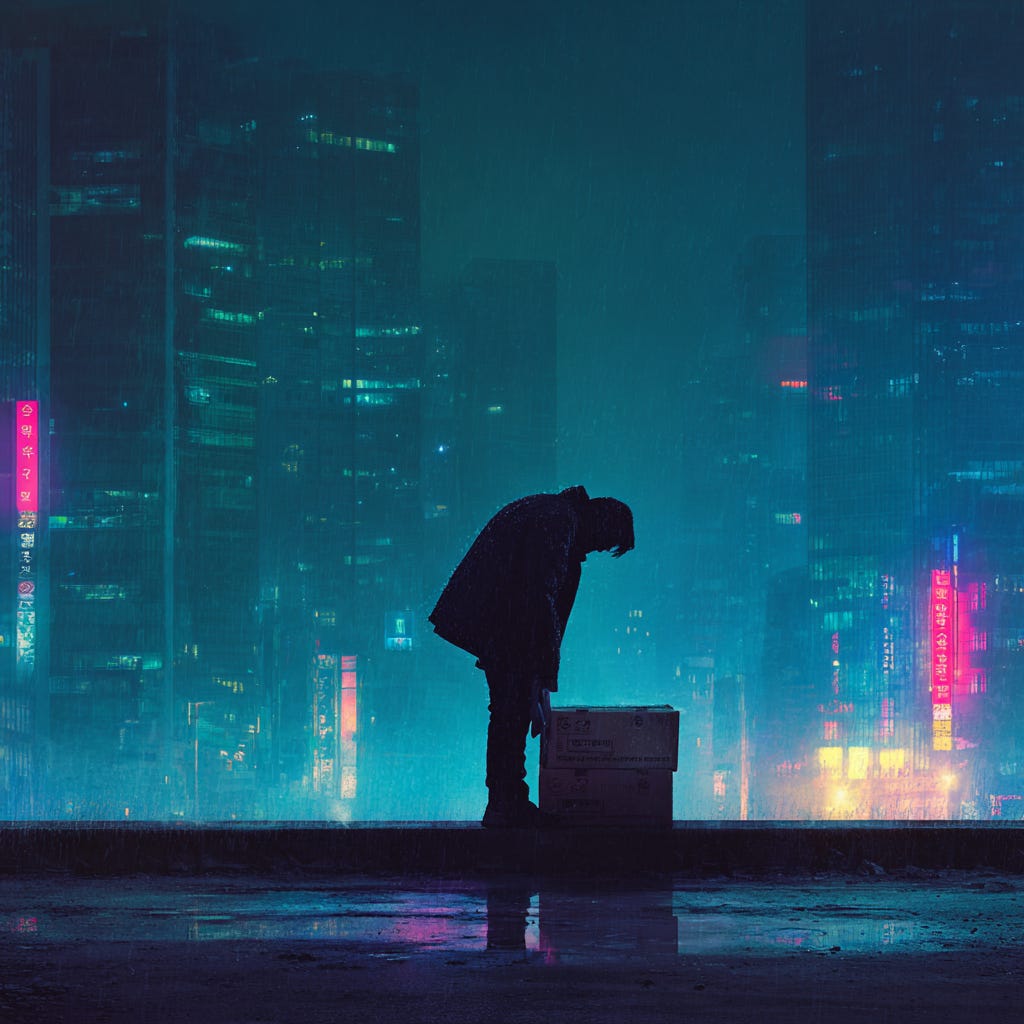
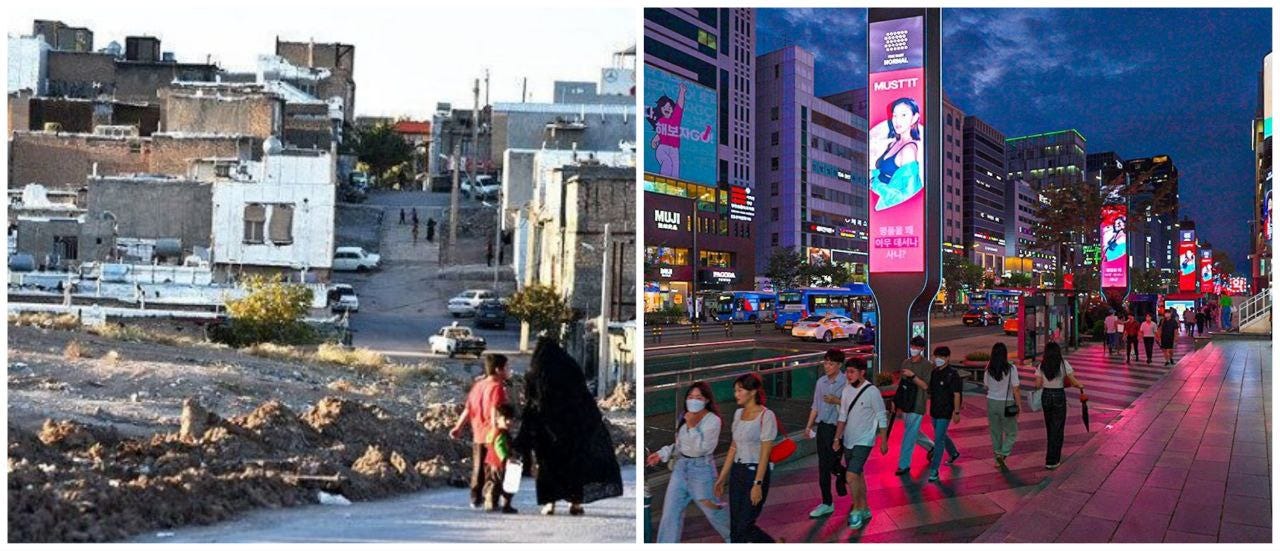
On November 6th, 2017, I experienced the biggest change in my life. My feelings that day could only be understood by time travelers or astronauts stepping onto a new planet. At the impressionable age of 18, I had left everything I knew behind and moved from Iran to South Korea. From a closed dictatorship to an open society, from a blend of 7th and mid 20th centuries to the 21st, from smoke clouds above clay houses to clean air around skyscrapers, from desert to a forest, from a small town to a 20 million people metropolis named Seoul.
It was when I stepped out of the airport, onboard the high-speed train gliding at 300 kilometers per hour toward the city center, that I understood just how simple the normal world was. Around me, what stood out the most was the passengers. They stood with healthy skin and erect spines. Their posture spoke of a fundamental trust in tomorrow that I had never seen in Iran. I caught my reflection in the train window—shoulders curved inward, head tilted downward, as if still expecting the Guidance Patrol to approach me from behind.
I felt like someone who had emerged out of a toxic cloud and was experiencing normal air for the first time. I took a deep breath and relaxed my shoulders, rejoicing that there are no militias or secret police here. That here, everyone’s safe. Including me.
After a few days of roaming the city almost afraid of touching things as if I were in a museum, I decided to blend with it. My Korean was still very broken, but I had been practicing English since the age of nine. Following the advice of someone from the internet, I looked around the US military base, where American flags were abundant and English was widely spoken, and discovered a popular pub that hummed with familiar words.
Even though I couldn’t afford anything, I spent most of my weekends there to listen to others. The atmosphere was very friendly. People came there not to drink, but to socialize with other expats. American soldiers came with their families, and so did others from English-speaking countries. Vintage arcade machines, decorative ribbons, and a rainbow flag were exhibited in different corners. After midnight, there was a microphone on the stage where people sang together their favorite songs while others danced. All the while, I stayed in my corner chair. They were all coming from rich free countries, and I was not sure if they would want to talk to someone from Iran.
Then suddenly, a toned young man extended his hand and said looking at me with a friendly smile: “Come join us! You look like someone who's forgotten how to move.”
I accepted his hand and joined the crowd dancing to American songs. Afterwards, I saw that him and other young foreigners were having a friendly conversation in a corner. My ice having been broken, I joined them, and we took turns introducing ourselves.
The young man who had invited me on the stage introduced himself as Ismail from Malaysia. “But feel free to call me Mail.” he said with a broad smile on his baby-like face.
When I introduced myself as someone from Iran, no one seemed to really know what kind of place Iran was except him. I saw a look of understanding in his face. As if, as the only other person there who came from an Islamic country, he knew that my nationality had made me more of a refugee than an expat.
He was outwardly cheerful, and a very vivid storyteller. He captivated the listeners with stories from his life. He seemed to have had a good life, being comfortably raised and having traveled the world with his parents. But something underneath, perhaps it was the bitter sarcasm, made me wonder whether he was hiding a deep pain in his chest. He laughed at every joke, including his own, with the desperate intensity of someone who had been underwater, gasping for joy like a diver gasps for air.
Twenty-two years old, Malaysian Chinese, eloquent, and fluent in five languages. His clothes looked expensive, but his shoes were threadbare. He looked like an aristocrat turned pauper. His parents—both doctors, he told us—had died in a car accident on the Malaysia North-South Expressway during monsoon season.
“They left me their debts,” he explained the darker side during one of our quieter conversations. Medical school loans, the house mortgage, his father's clinic equipment. “When they died, the creditors took everything.”
He looked solemn for a split second, then added: “I had to get out. They were about to take my underwear too! I can’t live without my underwear!” Then he started to laugh infectiously.
This is the rest of his story, as I understood it from our conversations: His parents died when he was a college student. He was hoping that the court would leave him with some of his parent’s wealth, but the judge had given everything to the creditors, telling him that he’s a healthy young man who could do without money.
After that decision, not being able to afford his tuition anymore, he had dropped out of his university and started working as a delivery driver. He used a motorcycle his parents had given him as a birthday gift to make his ends meet. A year later, he had gotten into an accident which totaled his motorcycle and compressed three vertebrae in his spine, leaving him with chronic pain and a slight hitch in his walk, which I saw him trying to disguise as deliberate swagger.
To escape grueling poverty in Malaysia, he tried to leave the country. He chose Korea as it was his only option. He flew into Jeju Island, the only province in East Asia that didn’t require visas for Malaysian travelers, and then he had taken a boat into the mainland Korea, hitchhiking his way to Seoul, a first-world city whose skyscrapers promised a meaningful life even to the poor and injured.
He told me that he was working in a factory. And knowing how he got here, I surmised that he was working there illegally.
“Maybe that’s why he acted a bit strange,” I thought. He was always wearing gloves, and refused to shake hands. He didn’t like to be around the police. He deposited his phone into public lockboxes. There was no way to reach him during the week.
But I liked him. He treated me like his younger brother. He invited me, for no reason, to restaurants and paid for my meals, even when he wasn’t hungry himself. It was as if through unspoken words he knew that I had no money, and that I was barely surviving with one ramen every other day.
My life was accelerating toward crisis. The 500 dollars I had arrived with—my parents' grudging concession to what they termed my “burial money”—had completely evaporated. Worse, nothing I said, no pleading or sobs of mine over the phone was able to win their support. I couldn’t pay the application fees, and I missed the university application deadline; the narrow window through which legal residence might have been possible. The unthinkable happened. My visa was triggered to expire in thirty days, and beyond that lay only the twin terrors of illegal residence in Korea and involuntary return to Iran.
Devastated and panicking, I set out to talk to Ismail. We were to talk in a coffee shop. It was late at night and it had started snowing. I was shivering, tucking my frozen hands between my thighs for warmth. My appearance—a light windbreaker and a beanie, with no gloves or scarves, invited strange looks from pedestrians with thick puffer jackets. I found Ismail. Seeing my cold pale face, he gave me the heat packs in his pocket and ushered me into the café.
The empty café smelled of lavender and burnt beans. He bought a slice of cake and pushed the plate on my side of the table. I began to tell him everything I had been hiding: the real reason I had left Iran, my need for a job, how much I was afraid of being deported, and my desperation to stay in Korea.
“I need to find an underground work.” I told him. “I thought if I apply for asylum I can get a work permit, but that’s not the case.” I paused to sigh. “And apparently it’s extremely hard to win an asylum case, but I’ll figure it out. I need to make money first and worry about everything else later. Can you please take me to your factory? Do they need more workers? If not, I’ll go around ask everyone. I’m not shy anymore. Yesterday I begged for food outside Myeongdong Station. I’ve accepted it. I’ll do whatever it takes to stay out of Iran. There’s still hope as long as I keep out of Iran.”
Ismail listened with the intensity of a detective, his eyes taking in every signal. He didn’t show any emotions. When I finished, I noticed an imperceptible drop of tear on his cheek.
“Let me see your hands.” He said, pulling back my sleeve, looking at my boney arms like a doctor. “You can't work in the factory,” he proclaimed. “You can’t take it. You’re stick and bones.”
“I’ll handle it. I’ll do anything.” I said desperately.
He looked around the café. The attendant was busy in the kitchen.
“The factory’s in Incheon,” he said. “We work literally underground—in the basement—and we take care of packaging and shipment. And I’m telling you; it’s harder than you think. You can’t last there for more than a week.”
In response to my insistence, he emitted a deep sigh and removed his gloves, revealing his bandaged hands. He began unwrapping the bandages. It revealed a dry and bruised skin with blisters in various stages of healing, some looking yellow and runny with infections.
Terror and grief filled my body. And a deep pressure down my throat stopped me from uttering words.
“Work shifts are fourteen hours minimum, sometimes eighteen when orders are backed up. I do the heavy lifting ‘cuz I’m the tallest one there. You’ll have to do the same heavy lifting, getting stuff from shelves. They have too many women and not enough men.”
Seeing that I was still not convinced, he resumed with the mechanical quality of a testimony.
“Let me tell you how it looks like. Illegal employees enter through a separate door. We get inside on Monday and the doors are locked until Friday. At night the lights are off so it looks like no one’s in the factory. No phones—they confiscate them to make sure we’re not tracked. And that no one can call an ambulance when someone’s injured. There’s a doctor outside town who treats us without asking for ID. She’s a kind lady. She bandaged it for me. But I need antibiotics, and she can’t send in a prescription for us who don’t have a visa. At the end of Friday, they hand us 100,000 won [90 dollars] in cash. Some of them, mothers, stay and clean up over the weekend so they get paid more. They end up sending their money back home to their children.”
Suddenly, his voice cracked with emotion. Then, as if to protect himself from the flood of emotions, he turned into cynical sarcasm.
“Imagine being so stupid that you’ll have children. I must thank God for turning me gay. Helped me dodge a bullet right there. But then he messed up and made me born a Muslim. That sadistic bastard! I like spending my money on myself. Go see a movie, get a pack of cigarettes, get drinks at the pub. There’s a guy there who lets me sleep in his house. Got lucky there! You can’t believe what I saw at his house the other day…”
He suddenly had a stupid expression on his face. He took the slice of cake he had pushed in front of me and swallowed it in an instant. He spoke incoherently, impersonally laughing at his own nonsense, and after a few minutes, he left to drink.
The coffee shop suddenly felt cavernous, filled with the hollow echo of his last words. “Sure! I can get you in if you want.”
The morning after, I got extremely sick and could not meet him for two weeks.
Meanwhile, one of the people whom I had earlier begged for money on the street and had asked to be in contact with me, sent me an email. He was a rich Polish businessman, and in his email, he offered to use his political connections to traffic me to Europe for sex (implied).
The clock ticked. The weather got colder and colder. I got weaker and weaker. My landlord would soon call the police to evict me. I was terrified of that man, terrified of selling myself to be trafficked. And feeling myself pushed to the corner, I decided to try my luck staying in Korea by working illegally in Ismail’s factory.
When Friday came, I went to our usual pub to ask Ismail to take me to his factory. But when I found him in that final evening, I saw him hunched over a table in the pub’s darkest corner. I barely recognized the person whose youthful charm was magnetism incarnate.
He was drunk—not celebratory drunk, but drunk the way people get when consciousness becomes unbearable. His head was down, his spine curved into a C shape. And when he looked up at me, his bloodshot eyes held the particular emptiness that comes from hope finally dying.
I asked him to take me to his factory. He said “Sure! I’ll take you there! Wait. Too bad. You’re a bit late. I’m going to surrender myself to the police tomorrow.”
For a second, I wasn’t sure if I heard him right. But his appearance was showcasing the same despair I thought I heard in his words. “What do you mean?!” I screamed. “Mail! What happened to you?” I asked, grabbing his arms to have him face me again.
When he turned to me, I realized that his head was not drooped voluntarily. Something in the middle of his spine stuck out like a broken tree branch.
“Let’s celebrate this last day together. It’s over. I’ve popped my discs. Couldn't work anymore—thrown out like broken equipment." He laughed, a sound like paper tearing.
“We need to get you to a doctor!” I declared with urgency.
“That’s the same thing as going to the police.” He said, chuckling. “Quick ID check and they’ll see I'm illegal.”
The sight of him—this person who had extended kindness when I had nothing to offer in return, who had shared food and conversation and hope—reduced to this broken state of suffering, made something fundamental shift inside me. My stomach contracted with a nausea that wasn't only physical but existential. My body's rejection of a reality too cruel for my mind to process.
I wanted to help him, to say something that might restore even a fraction of the light he had lost. But what could I do? Of what use was hope in a world that would reduce this bright soul into a broken animal? Didn’t the country, with all its laws, wealth, and power, want us to give up?
“I should go,” I mumbled, already standing, already fleeing.
That was January 23rd, 2018. The last time I saw or heard of Ismail. In a terrified frenzy, I emailed the Polish businessman and accepted his offer. Understanding nothing but the need to escape. A few months later, I was a de-facto slave in Europe, trapped in that old man’s apartment. Knowing that refusing, screaming, or running away, meant nothing less than revocation of my visa and deportation to Iran.
But that night, walking through Seoul's neon-bright streets toward my own small room of desperation, I understood something fundamental about the West that continues to haunt me to this day.
Centuries ago, people were born either peasants or nobles. Those who were born to noble parents were free to keep their heads high and sprint anywhere, whereas those born as serfs were expected to remain toiling on the land they were born in. And if a serf tried to escape, he was tortured and cast into dungeons with low ceilings.
Maybe what I saw in that train was revealing of a deeper reality. Those who kept their heads high were born to the right parents. And perhaps it was mistaken of me to copy their posture. Because Ismail and I were runaway serfs, deprived of the same right as other people on that train.
Ismail, who fought for his right to keep his head high, was broken. He tried to stand up, and his spine was broken in half by laws that denied him the right to work and see a doctor. Serfdom still lingers in free countries. And whereas medieval serfs could secure their freedom by living in big cities for a year and a day, there was no promised freedom to me and Ismail. That lack of hope for future was what broke us.
Seoul was beautiful—genuinely, magnificently beautiful. So are most Western cities. The Western prosperity is real, its opportunities genuine, its freedom tangible. But unknown and unspoken outcasts live in its shadows. In those shadows lived people like Ismail, and the thousands of others locked in basement factories and hidden dormitories, people whose suffering benefited no one.
Was the unsafe illegal factory to be blamed for Ismail’s broken back? No. The factory was what kept him from begging for food on the street like me. Was he to be blamed for escaping his country? No. He was a hero for seeking a better life. But he later learned that all paths were closed to him. Whether in his country or in any other one.
Since that night, the West’s beauty became complicated in ways that would never resolve. Even though I’m free now, I couldn’t enjoy living in freedom if I didn’t speak out against those injustices. Me telling the story of Ismail is my way of trying to love the West by calling out its medieval elements.
Dear Ismail, wherever you are, thank you for being my only friend and supporter in Korea. Know that I have never forgotten about you. I regret not having been able to help you every day. You fought like a brave soldier. And I will never let your story be forgotten.
The more of your posts I read Pouya, the more I am intrigued by your story. Truly it is amazing and impactful to read.
Just as you called Ismail a hero, you are also a hero for striving for a better life for yourself. I also hope that Ismail is okay, where ever he is, I hope that you somehow get in touch with him.
I continue to be staggered by the injustice of immigration laws in otherwise enlightened countries. And I am so saddened to hear about people who so desperately want the chance to take care of themselves only to be denied it over and over by moral pygmies who in a better world wouldn't be worthy of being these people's servants. Please keep on telling your stories. Hopefully they will start to get through the thick skulls of many of my countrymen.